
It’s been a few weeks now. The dust has settled, mostly. Misty Copeland has had her moment (and what a moment it was, appearing on stage mid-performance, right in front of Timothée Chalamet’s face at the Oscars, in what I can only describe as masterclass-level petty and absolutely perfect. Chef’s kiss, mon cherie!). Charlize Theron has publicly called his comments “very reckless.” Conan O’Brien cracked jokes about it on live television. The internet has moved on to the next thing.
And yet, I cannot stop thinking about it.
Not about Chalamet. Not really. What I can’t stop thinking about is the collective response from the performing arts community: the wounded op-eds, the indignant Instagram posts, the celebrity pile-ons, the flood of “actually, people DO care” invitations sent to a 29-year-old actor who said something suuuuper sloppy during a press junket.
All of that energy. All of that fire. Pointed outward, at a famous person who said something painful.
Here’s my question: what if we pointed it inward?
What He Actually Said (And What We Heard Instead)
During a town hall with Matthew McConaughey in February, Chalamet said he didn’t want to work in a field like ballet or opera. “…things where it’s like, ‘Hey, keep this thing alive, even though no one cares about this anymore.'”
He immediately tried to walk it back: “All respect to the ballet and opera people out there.”
What the performing arts world heard was your art is worthless and so are you. Alas, the woundedness.
What I think he said was: I am afraid of irrelevance, because I am young and silly and newly famous, and I am naming two industries I associate with that deep fear.
Hyperbolic? Yes. Imprecise? Absolutely. He’s an artist; hyperbole is his medium. But there’s this thing about hyperbole – it is usually pointing at something very, very real.
Let’s Look at Art by the Numbers
In 1982, 3% of the U.S. population attended opera performances and 4.2% attended ballet performances. Those numbers were never enormous. But here is what happened next.
As of 2022, merely 0.7% of the U.S. adult population attended opera performances. Ballet attendance had fallen by 52% since 1982.
Fifty-two percent. Since 1982. Not since COVID. Since 1982.
Ticket sales for major U.S. opera companies dropped 21% between 2019 and 2023, with revenue falling 22% over the same period.
And then there’s the financial picture underneath the attendance numbers. Working capital (the financial cushion organizations rely on in the short term) has declined for three consecutive years, now sitting at just 4.2 months of operating expenses. Four in ten organizations have three months or less. The pandemic relief funds that kept many organizations afloat have been spent. The runway is shortening.
This is not a COVID hangover. This is a structural crisis, four decades in the making, that demands a structural response.
So: no one cares? Not quite. But far fewer people care, in ways that are measurable, documented, and have been trending in one direction since before most of Chalamet’s fans (AND CHALAMET HIMSELF) were born. My heart aches because the people I love in this industry have been watching these numbers for decades and are STILL mad at a movie star for saying them out loud.

The Money Story Nobody Wants to Tell
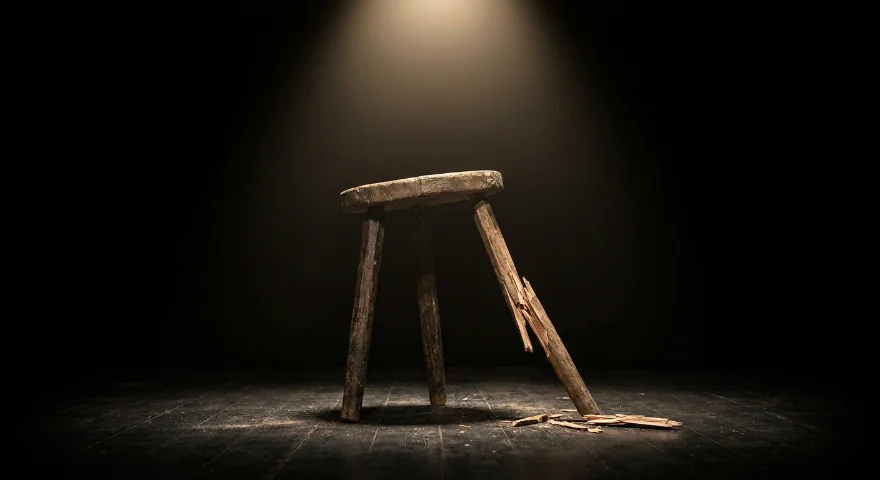
The classical arts in America were never fully self-sustaining. They were built on a three-legged stool: ticket sales, major donors, and government subsidy. And for a few glorious decades in the postwar period, that stool held.
The National Endowment for the Arts was created in 1965. It was part of Lyndon Johnson’s Great Society, born in a cultural moment when the government actually believed it had a role in funding excellence. From the mid-1980s to the mid-1990s, Congress granted the NEA an annual budget of between $160 and $180 million.
Then came the culture wars.
In 1996, Congress cut the NEA budget to $99.5 million in response to pressure from conservative groups. That was 30 years ago. If the NEA’s 1992 budget had simply remained constant and been adjusted only for inflation, it would be $320.7 million in 2019 — instead of $155 million. That’s a $165.7 million difference.
That gap didn’t disappear. It became deficits. Deferred maintenance. Underpaid artists. Canceled seasons. Locked-out musicians.
And now? In May 2025, the National Endowment for the Arts abruptly terminated nearly 560 grants totaling more than $27 million, spanning performing, visual, literary, folk arts, and education. On the same day those cancellations landed, the current administration proposed eliminating the NEA entirely. (take a breath, my love)
One leg of the stool has been systematically shortened for 30 years. And we have been low key pretending it wasn’t happening.
The donor pipeline has changed, too. The tech billionaires and private equity money that replaced the old industrial philanthropist class did not grow up going to the opera. They are not interested in naming rights on a proscenium. The organizations that ARE getting funded right now are the ones that can demonstrate community impact, innovation, and responsiveness to the people they serve. Not the ones insisting on their own historical importance.
The Business Model That Worked 70 Years Ago
Imma say something uncomfortable about the nonprofit arts model itself.
The structure that most opera companies, ballet companies, and symphony orchestras operate under was designed for a specific cultural moment: post-World War II America, where classical arts carried enormous social cachet, wealthy industrialists felt an obligation to fund culture as civic duty, government subsidy was reliable and growing, and season subscriptions provided predictable upfront revenue.
Every single one of those conditions has changed. And yet the model has not.
Opera companies have nearly doubled administrative costs as a share of their budgets since the mid-2000s, while spending on artistic programming has remained flat. The bureaucracy grew while the art stayed still and the audience shrank.
The subscription model has collapsed in parallel. Consumers shifted to à la carte cultural experiences rather than committing to full seasons of programming. Arts groups that historically relied on a healthy infusion of upfront subscription revenue could no longer count on it. The model assumed a consumer who planned six months ahead, bought a season, dressed up, drove downtown, paid for parking, and came back twelve more times. That consumer still exists. There are just far fewer of them. And the organizations built to serve that consumer have not fundamentally restructured to serve anyone else.
Meanwhile, the arts broadly are thriving. The U.S. arts and cultural sector contributed $1.1 trillion to the economy in real value added in 2022, accounting for 4.3% of GDP. Private philanthropy alone injected over $23.5 billion into the sector in 2023. The problem is not that people don’t want art. While in-person attendance declined over the past ten years, consumption of arts via digital media has only increased to 75% of all Americans as of 2022.
The public did not stop loving art. They stopped buying what classical institutions are selling, at the price classical institutions are charging, in the format classical institutions are delivering it.
That is not a passion problem. That is a business model problem.
If this is landing somewhere real for you, good. That feeling is information. The SpeakEasy Cooperative is where we do this work together: the structural, uncomfortable, deeply necessary work of building a business that actually belongs to you. Come see if SECO is your people →
“If They Would Only Come See Us” Is Not a Strategy
Before we get to the inevitable “if more people just heard or saw it, they’d love it” response…can we pause and look at that assumption for a second?
This belief is entitlement dressed up as optimism. It puts the problem entirely on the audience. It assumes the art is perfect and the delivery is fine and the price is reasonable and the only issue is insufficient exposure. It assumes that people who have chosen not to attend are simply uninformed rather than having made a legitimate choice with their time and money.
The market is not wrong. It is information. And it has been sending the same message for four decades.
The organizations that ARE growing (the ones researchers at the NEA call “Trend Busters”) did something radical. They stopped waiting for the audience to come to them and started going to the audience. Ballet Austin redefined what they were offering and who they existed to serve. Their mission explicitly says the organization exists to involve and strengthen its community through dance and health and well-being. Today, their Butler Center for Dance and Fitness offers 60 adult classes per week and welcomes more than 11,000 participants each year. Fitness participants routinely become audience members, many of whom become donors who fund community engagement activities.
Note what Ballet Austin did NOT do: they did not make a stern Instagram post about how ballet is actually important. They changed the offer.
Funding Independence: Whoever Funds Controls
Here is where we stop talking about opera and start talking about you.
When an arts organization, a music studio, or an artist, depends on a single source of funding, they don’t just risk financial instability. They risk the slow surrender of creative and operational autonomy to whoever holds the check. To my mind, that is much worse.
We have watched this happen at the macro level in slow motion. The NEA stopped funding individual artists directly after 1994. In 1989, it had given $8.4 million in direct grants to artists, which was the high-water mark for unrestricted government funding for individual artists. Political pressure made it impossible to continue. The money moved from artists to institutions. The institutions had to keep the funders happy. The funders wanted certain things. And the art followed.
Now let’s look at our own businesses.
Where does our revenue trickle down from? Is it one platform that could change its algorithm tomorrow? One school or studio that employs us? One certification body whose approval we depend on? One grant cycle that funds our work for 12 months and leaves us scrambling after that? One kind of student, even?
If the answer is yes, we are not free. We are artists who have handed the keys to someone else and are hoping “they” will let us keep making art.
The classical arts are learning this at institutional scale, in public, over decades.
You have the chance to learn it smaller, faster, and with far less collateral damage.
Business Lessons from the Classical Arts Decline
This week, I want you to do one thing.
Draw a pie chart of your revenue. Not in your head, sneaky! On paper, or on a screen, somewhere you can actually see it. Slice it by source: which clients, which platforms, which employers, which programs, which revenue streams.
Then ask yourself if the biggest slice disappeared tomorrow (platform change, school closure, grant not renewed, client-base leaving) what happens to your business?
If the answer is “I’d be in serious trouble,” that is your work. Not the content, not the branding, not the visibility. The structural question of who funds you, and therefore who has quiet control over what you create and how you create it.
The market is not your enemy. Build direct relationships with the people who love what you do. Grow the audience that funds YOU alongside those institutions, platforms, and grant committees. Create revenue that you own and can take with you, that reflects your values and serves your people.
Because when you control your funding, you control your art.

That is what I think the classical arts never fully figured out. It is what I want us — all of us — to figure out before we find ourselves making stern Instagram posts at a movie star while the real problem lives inside our own business model.
Tell me what your pie chart looks like. I want to know what you see.
And if what you see scares you a little, that’s exactly the work we do at The SpeakEasy Cooperative. Come find your people →

Further Reading
- From Artist to Entrepreneur: Skills You Didn’t Know You Had
- Five Reasons I Gave Up “Charging What I’m Worth”
- Running My Business When the World Feels Like It’s Falling Apart
- Why Social Enterprise Matters for Micro Businesses
- Resources for Creative Entrepreneurs Ready for a Revolution
Your Questions About the Classical Arts Crisis, Answered
Why have ballet and opera attendance numbers been declining?
Since 1982. Not since COVID, not since streaming. Ballet attendance is down 52% over that stretch. Opera audiences have shrunk from 3% to 0.7% of U.S. adults. This isn’t a cultural blip we’re waiting to recover from. It’s a structural crisis four decades in the making: a collapsed subscription model, thirty years of government funding cuts, and a philanthropic class that has quietly moved on.
What happened to NEA arts funding?
Congress was funding the NEA at $160–180 million a year through the late 1980s. Then came the culture wars, and by 1996 that number had been cut to $99.5 million. Adjusted for inflation, the 2019 NEA budget was $165.7 million short of what steady funding would have been. That gap didn’t disappear. It became deferred maintenance, underpaid artists, canceled seasons. In May 2025, the current administration terminated nearly 560 grants totaling over $27 million and proposed eliminating the NEA entirely.
What does the classical arts funding crisis have to do with running a creative business?
More than it might seem at first. When NEA funding dried up and subscriptions collapsed, the organizations without backup plans folded or shrank. The same is true for individual creatives. One platform. One employer. One grant cycle. One type of student. Any of those can go away, and when they do, the question isn’t whether you saw it coming. It’s whether you built something that could survive it.
How can creative entrepreneurs avoid the same funding trap?
Draw the actual pie chart. On paper, on your phone, on a napkin. Slice it by source: which clients, which platforms, which employers, which programs. Find the biggest slice. Then ask honestly: if that one went away tomorrow, what happens to your business? That answer is your starting point. Then start building income that belongs to you: memberships, direct client relationships, community-based offerings. Things that don’t evaporate when an algorithm changes or a contract ends.
What did Ballet Austin do differently from other classical arts organizations?
They stopped waiting for people to come back and went to where people already were. Ballet Austin rebuilt their mission around community health and well-being, opening the Butler Center for Dance and Fitness, which now offers 60 adult classes a week to more than 11,000 participants a year. Those people become audience members. Audience members become donors. The whole thing compounds. They didn’t write a passionate defense of ballet’s importance. They changed the offer.
What is The SpeakEasy Cooperative and how is it relevant?
The SpeakEasy Cooperative is a community for creative entrepreneurs who are done handing control of their art and their income to other people. We work on the structural stuff: revenue, pricing, sustainability, building something that actually reflects your values and belongs to you. If this post stirred something, the work continues here →.
Sources & Further Reading
- NEA Survey of Public Participation in the Arts (SPPA), 1982–2022 — 40-year attendance data across all arts disciplines. culture-for-hire.com
- OPERA America Financial Data Study (2005–2023) — Box office receipts, donation trends, and administrative cost analysis. Full findings published in the Journal of Arts Management, Law, and Society, 2026.
- NEA Appropriations History — Congressional funding records 1966–present. arts.gov
- Americans for the Arts: NEA Budget Losses Report — Inflation-adjusted funding gap analysis. americansforthearts.org
- National Endowment for the Arts Wikipedia entry — Legislative history, culture wars timeline, 2025 grant cancellations.
- PBS NewsHour: “Local arts groups face budget gaps as NEA pulls grants” — May 2025 coverage of the 560 grant terminations. pbs.org
- SMU DataArts Report: “As Relief Funding Dwindles, Arts and Culture Seeks New Revenue Sources” — Working capital and financial health data, 2024.
- NEA: “Decoding the Trend Busters” — Case studies of organizations growing audiences against national decline, including Ballet Austin. arts.gov
- The Conversation: “Opera is not dying — but it needs a second act for the streaming era” — Labor economist analysis of opera NFP financials, January 2026. theconversation.com
- San Francisco Classical Voice: “Is There a Future for the Nonprofit Arts Model in the U.S.?” — sfcv.org
- Nonprofit Quarterly: “Staging a Comeback: How the Nonprofit Arts Sector Has Evolved Since the Great Recession” — nonprofitquarterly.org
- ArtsJournal/Scene Change: “Why Are American Nonprofit Arts Organizations Failing?” — Donor motivation analysis using Konrath & Handy research. artsjournal.com
- Daily Tar Heel: “Timothée Chalamet is right about ballet and opera — we just aren’t hearing him correctly” — March 2026. dailytarheel.com
- Jacobin: “Celebrities Can’t Save Opera. Public Funding Can.” — March 2026. jacobin.com


MICHELLE!!!!! Yes, a real deal Marketing Ops discussion. This is where my geek brain lives! I KNOW that each and every business (from solo to the largest) out there in the world has these ops; they just have to recognize them and be open to the exploration of the truth waiting to be uncovered When a mindset becomes stagnant, it will always trend toward decline, just tread water, or slowly disappear. NO, not always obvious, but the data is always there if you are willing to look with an open mind.
Thank you so much for reading, Jill! And I agree- To paraphrase Walt Disney “Innovate or die!”